
You Know This! (in BAGEL)
BAGEL, FOR THE LOVE OF TENNIS, Issue 4
At 57, Andrea Askowitz is back on the senior tennis circuit, running down every ball, ignoring her partner’s advice, and slowly turning herself into a Greek myth.
The 2026 Barbara Cooper Cup in Ft. Lauderdale was my second tournament in two weeks. It’s exhausting playing tournaments back-to-back at this advanced level and this advanced age — I’m 57, and women from all over the world, some former pros, play these things. I knew the difficulty because I did this last year. Still, I played two in a row again. Maybe there are some lessons to learn.
I’m a Miami native and started playing on hard and clay courts in 1978. I played junior tennis seriously and played college tennis at the University of Pennsylvania. I took a 25-year break, then trying to get my kids into the game, I found a clinic where I now go twice a week and bat the ball around, mostly with men, mostly a lot younger. I beat most of these guys and started to wonder: Do I still got this?
So, a year ago, I re-started my tennis career. After 35 years, my Penn doubles partner, Meredith Stiehm, and I are back on tour. At my first tournament – Les Grandes Dames a clay court competition in Palm Beach, I won the first two rounds by running down every ball and hitting more shots than my opponents, just like I did when I was 18. My strategy has always been to rely on being the last one standing. Then, I played Susan Wright, who was 68.
Susan was tan, and fit, and wore a perfect outfit with matching pink lipstick. She looked like a player, but she was 12 years older than me. I thought for sure I’d win. I’d make her run. Instead, Susan stepped just inside the baseline and caught my balls early, placing them with lethal precision. She dropped, lobbed, and came into the net, making me run until I was wrecked. Susan took me down 6-1, 6-2 without even smudging her lipstick.
After the match, I did some research. Turns out, Susan Wright played number one for the 65s USA World Team and won the gold. When she was 18, she was 75 in the world.
I played five more tournaments in the next several months, winning some and losing some. I hit and hit until my opponent missed or put the ball away. The problem: most of my opponents didn’t miss so easily. Some of my matches lasted three hours. Every match felt like a Sisyphean test of endurance. And yet, I wasn’t ready to shed my 18-year-old approach to winning. Maybe I just needed to get into better shape.
So, I found a training schedule online to get ready for the USTA National Women’s 55-and-over Grass Court Championship in Philadelphia. Every other day, for three weeks leading up to the tournament, I did three sets of 12 burpees, full-court sprints, half-court sprints, and jumped rope 1,000 times.
I was ready! Or so, I thought. But, in the first round, my opponent, Anna Zimmerman, chipped backspin slices that stayed low to the ground. All that training did nothing to prepare me for “grass ass” – how grass players describe the sore butt you get from bending so much. She came to the net, hardly letting the ball bounce on her side, which I had been told was the only strategy that worked on grass. But I’m a baseline player. I play long rallies to outlast my opponents. After getting creamed, I was vexed. I vowed NEVER to play on grass again.
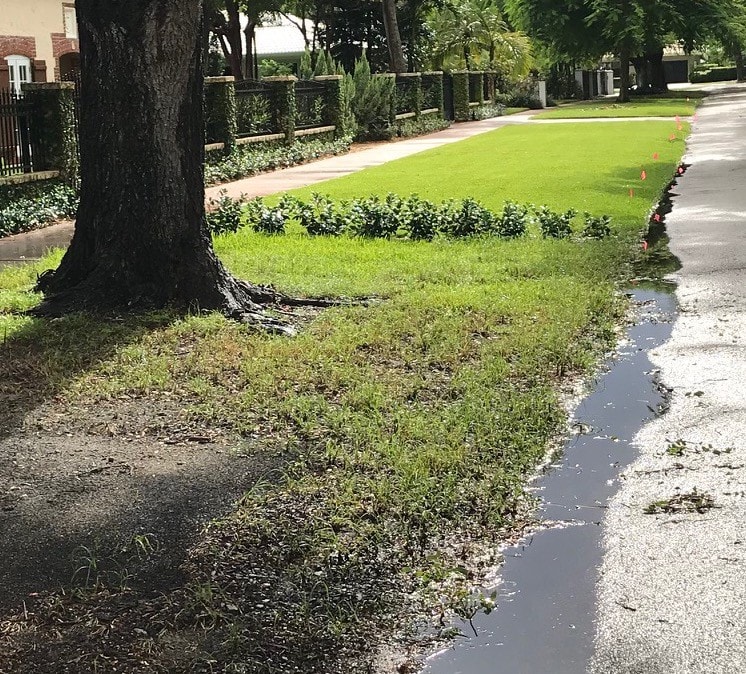
Grass is the worst surface known to tennis. Every bounce is a mystery. There are dirt mounds and fluffy patches that send the ball every which way. I mean, why play tennis on the front lawn when you can move the game to the street?
Somehow, I won two matches in the consolation, even with my baseline strategy, and then faced the same woman who beat me in the first round. This time, because of rain, we were moved to indoor hard courts. This was my chance. I actually felt sorry for poor Anna. On a hard court, I could play my 18-year-old game. I would outlast her yet. Again, she chipped and came in. She hit drop shot after drop shot, all of which I sprinted for but couldn’t touch. In the old days, I would have crushed those drop shots, but now…I knew I had to change my strategy. I had to do what Susan Wright does and come into the net. I looked over at Meredith who was cheering me on. She held up her palm and bopped it forward the universal sign for volley but I didn’t come in.
Anna Zimmerman beat me a second time.
I walked off the court, still warm, so I didn’t yet feel the abuse I’d done to my Achilles. I felt something else: the sting of the truth. Getting beat had nothing to do with playing on grass. The game doesn’t change with the surface. The game changes with age.
I worked my Achilles so hard that week and the weeks leading up to the tournament, I could barely walk on it. Instead of helping, my relentless training backfired. I spent the next three months off the court including two weeks wearing a knee-high boot so bulky that I bonked into everything. I now understand how dogs feel when they’re sentenced to that cone.
What’s the metaphor here?
The term Achilles heel comes from the Greek myth about Achilles whose mother tried to make him invulnerable. She dipped Achilles’s entire body into the magical River Styx, except where she held him by the heel. Why didn’t she grab the other heel and dip the one exposed? Was it to teach Achilles a lesson? Was it to teach me a lesson?
What lesson?
My heel? It healed. And I’m playing again. Here’s what I learned: I can’t train like an 18-year-old anymore. And I can’t play like an 18-year-old anymore.
I get it. I’m on the senior circuit, so duh. I need to change because I am changed.
I won my first two matches in the Barbara Cooper Cup by grinding down my opponents, old-school style. Then, against the first seed, I needed something more. Again, Meredith was there giving me the signal. This time, I read more into it than simply come in and volley. Meredith’s hand screamed, “YOU KNOW THIS!”
With all this wisdom spelled out for me, I came into the net twice. Only twice. Of course, I lost.
It’s been a week since the Barbara Cooper Cup and while my Achilles is intact, I am still sore from what I put my body through. Maybe, instead of Achilles, I’m Icarus. He’s the one who was warned not to fly too close to the sun. But he got going and felt good and like me, he ignored expert advice. He forged ahead with the recklessness of youth and refused to recognise his own physical limits.
I don’t want to be Icarus and plunge into the sea. Instead, I know what I have to do. Now, it’s a matter of doing it. If I can, then maybe, when I’m Susan Wright’s age, I’ll take down a little 57-year-old and teach her a lesson.
Photograph by Alexander Aguiar